

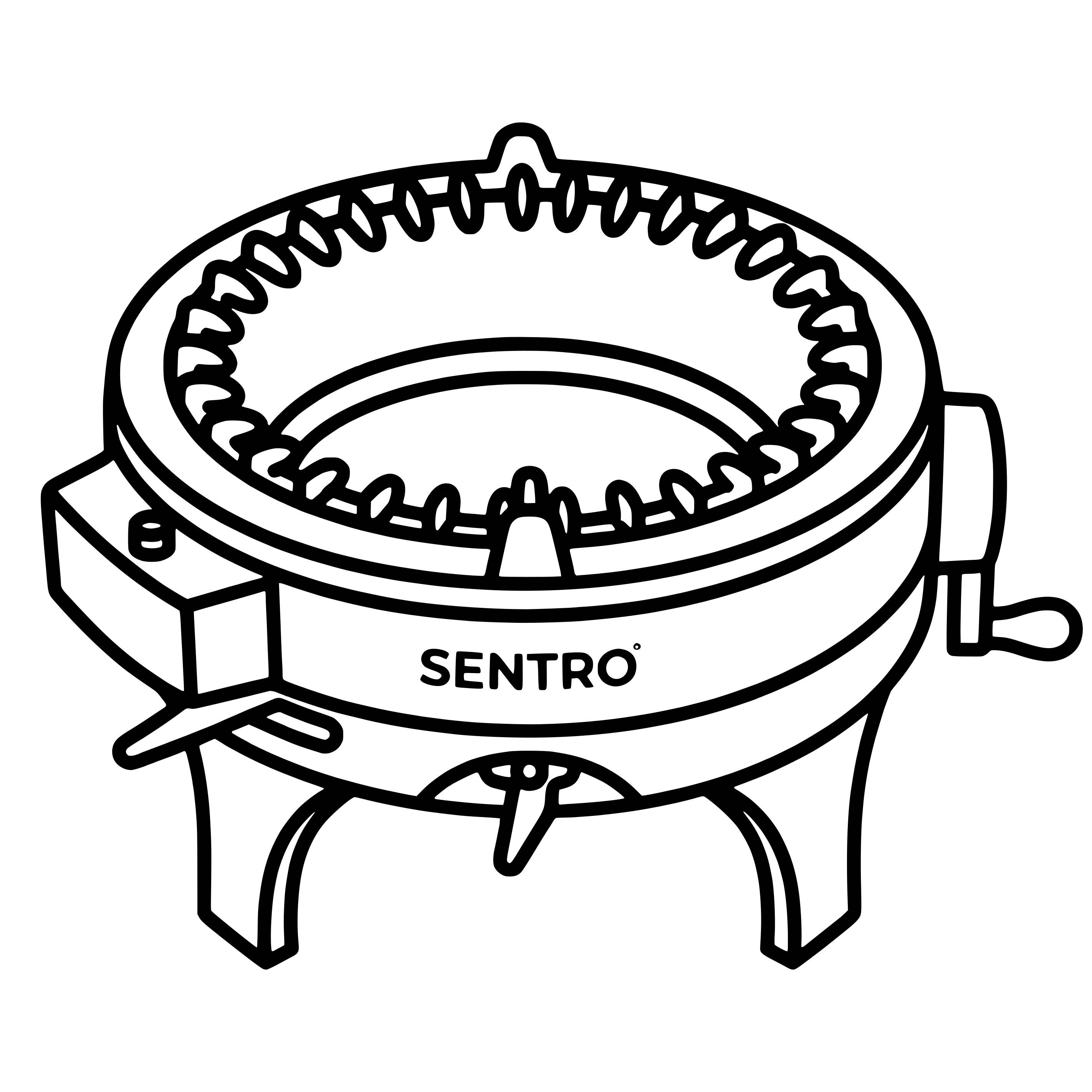
Let’s be honest: traditional hand-knitting is a beautiful art, but it’s also a massive time sink. If you’ve been scrolling through social media and seeing those lightning-fast hats and scarves appearing in minutes, you’ve likely met the Sentro knitting machine.
Whether you’ve just unboxed your first 48-pin circular machine or you’re still on the fence, there’s a steep learning curve that the manual doesn’t tell you about. Here’s the real scoop on what makes the Sentro a game-changer (and a few quirks you should prepare for).
1. It’s Not Just for Yarn Anymore
Most people stick to standard worsted weight yarn, but the Sentro is surprisingly gutsy. I’ve seen crafters successfully run lightweight cotton cords and even thin t-shirt yarn through those plastic needles. The trick? You have to feel the tension with your fingers. If the handle starts to resist, stop immediately—your Sentro is telling you the “fiber” is too thick for its gears.
2. The “Speed vs. Quality” Trap
It’s tempting to crank as fast as possible to see that hat grow, but cranking speed changes your tension. If you go full speed, your stitches might end up loose and airy. If you want a tight, professional-looking fabric that actually holds warmth, you need to maintain a slow, rhythmic pace. Consistency is king here.
3. Flat Mode: The Hidden Gem
Everyone starts with tubes (hats, socks, sleeves), but don’t ignore the “P” (Plain/Flat) switch. This allows you to knit flat panels for blankets or even pieces for a custom sweater. Pro tip: Flat knitting on a Sentro is notoriously finicky at the edges. You’ll need to watch those end needles like a hawk to prevent dropped stitches.
4. It’s the Ultimate “Upcycling” Tool
Got an old, ugly sweater sitting in the back of your closet? Frogging (unraveling) old knitwear and running that reclaimed yarn through a Sentro is incredibly satisfying. It’s an eco-friendly way to turn “trash” into a trendy beanie in under 20 minutes. Just make sure to steam the yarn first to get the kinks out!
5. Maintenance is Non-Negotiable
Since the Sentro is largely made of plastic, those internal gears grind against each other. If your machine starts squeaking like a rusty gate, it’s crying for help. A tiny drop of sewing machine oil or some white lithium grease on the ring gear will make it glide like butter. Do this every few projects to extend its life.
6. You’ll Join a Global “Support Group”
One of the best things about owning a Sentro isn’t the machine itself—it’s the community. Whether it’s a specific Facebook group or a YouTube tutorial on how to fix a dropped stitch, you’re never alone. If you run into a tension issue at 2 AM, someone online has definitely already solved it.
7. Time is Your New Best Friend
Hand-knitting a beanie usually takes me about 5 to 7 hours of focused work. With my Sentro 48, I can cast on, knit the tube, and cast off in 25 minutes. For anyone running a small craft business or making Christmas gifts for a huge family, this efficiency is a total lifesaver.
8. Mastering the “Waste Yarn” Technique
To get that professional, store-bought edge, you’ll want to learn the waste yarn method. Using a high-contrast scrap yarn for your first and last few rows makes casting off much cleaner. It’s an extra step, but it’s the difference between a “homemade” look and a “handmade” masterpiece.
Final Thoughts: Is it Worth It?
The Sentro knitting machine isn’t a “set it and forget it” robot. It’s a tool that requires a bit of intuition and a lot of patience. But once you find your rhythm and learn to “listen” to the clicks of the needles, you’ll wonder how you ever crafted without it.
Happy cranking!
Well said, I truly agree with the post above. Ive purchased the Sentro 48,40,32,and 22 and never had a issue. I truly love the machines they got me thinking im a proud at knitting. My hats are beautiful and I love them. I have thought about have a group where we can get together and have what I call a spinning class. Where I can teach on the sentro machines and make hats, scarf and my favorite neck crowl. This is just how much I love my sentro machine. I want to share with those who want to learn
Hi Toni,
Thank you so much for sharing your experience—this is honestly amazing to hear! 😊
It’s always inspiring to see someone who truly enjoys working with different SENTRO machines and creating beautiful pieces like hats and neck cowls.
Your idea of a “spinning class” sounds fantastic! Teaching others and bringing people together to create is exactly what makes crafting so special. There are so many beginners out there who would benefit from learning directly from someone with real hands-on experience like you.
We actually have a growing Facebook community where SENTRO users from around the world share projects, tips, and ideas—it’s a great place to connect with others who love these machines just like you do.
👉 You’re very welcome to join and share your creations or even your class idea here: https://www.facebook.com/share/g/1G7QqK5jk5/
We’d absolutely love to see your work and have you as part of the community!
Happy knitting and keep creating 💛