

The best yarn for a Sentro knitting machine is a smooth #3 (DK / light worsted) or #4 (worsted / medium) yarn, ideally acrylic or an acrylic blend with an even, low-fuzz surface. That is the range the manufacturer’s own manual recommends — DK, worsted, and Aran weights — and it is also the range machine knitters report the fewest dropped stitches and jams with. Very thin yarns tend to drop stitches; very thick yarns strain the needles and can jam the machine outright.
This guide breaks the choice down three ways: by yarn weight and machine size, by fiber and texture, and by specific brands — including the ones widely reported to cause trouble.
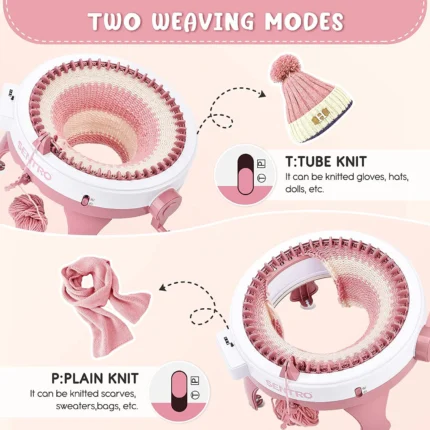
What Size Yarn Does a Sentro Use? (By Machine)
Sentro machines come in four sizes, and each handles a slightly different yarn range. The thinner the machine’s gauge spacing, the thinner the yarn it likes.
| Machine | Comfortable yarn diameter | Yarn weights that fit |
|---|---|---|
| Sentro 22 needle | 1–3 mm | #1–#3 (fingering to DK) |
| Sentro 32 needle | 1.5–3 mm | #2–#3 (sport to DK) |
| Sentro 40 needle | 1.5–4 mm | #3–#4 (DK to worsted) |
| Sentro 48 needle | 1.5–4.5 mm | #3–#4, the lightest #5 with care |
Two rules cover almost every situation:
- #3 DK is the safest all-round choice. It runs on every Sentro size, gives a defined stitch, and is forgiving while you learn tension control.
- #4 worsted is the workhorse for the 40 and 48. Most hat, scarf, and blanket patterns for these machines are written for worsted. Check the specific skein, though: #4 yarns vary a lot, and a thick, stiff #4 behaves more like a #5.
If you are buying your first skeins for a new machine, start with one ball of smooth #3 and one of smooth #4 and knit a test tube with each. Ten minutes of testing tells you more about your machine’s preferences than any label.
Fiber and Texture: What Actually Matters
Weight gets you into the right zone; texture decides whether the machine enjoys it.
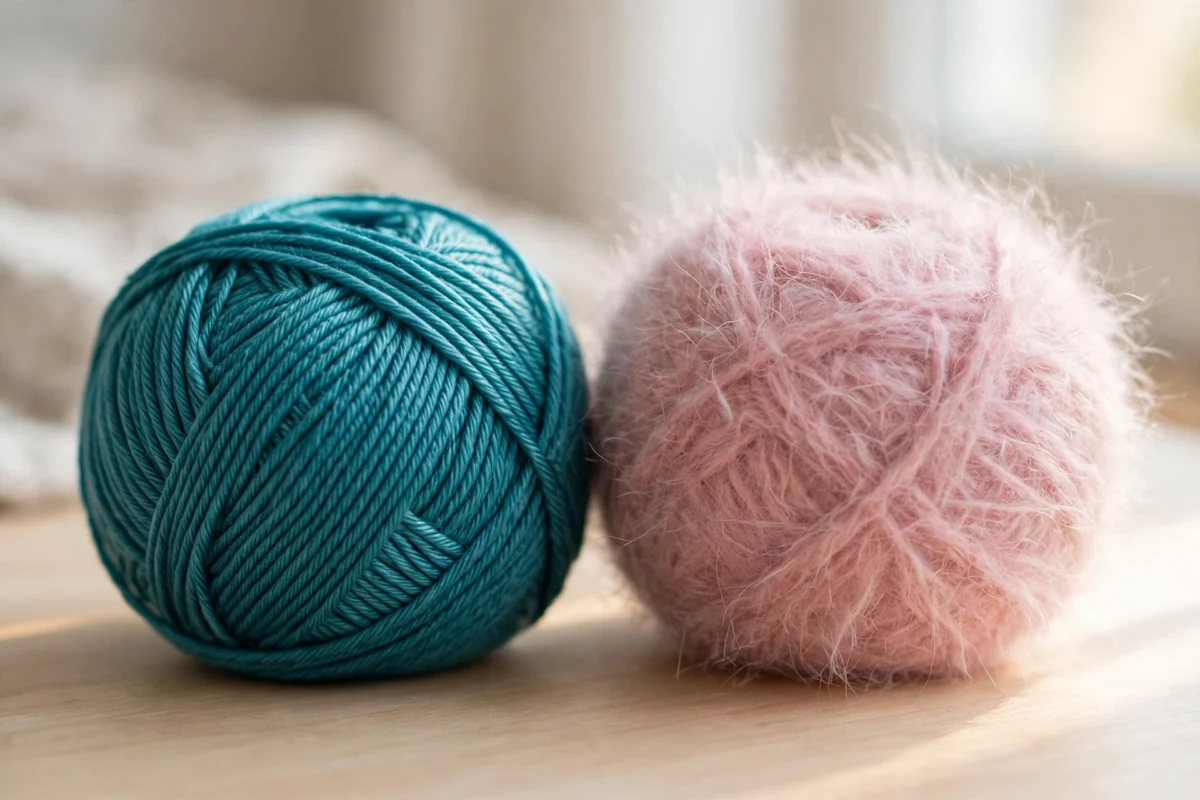
Smooth beats textured — this is the most consistent finding across user reports. The needles need to slide through every loop cleanly, thousands of times in a row. Anything that catches, splits, or sheds will eventually catch, split, or shed inside your machine.
- Acrylic is the beginner standard for good reason: smooth, consistent thickness, no halo, cheap enough to practice on, and easy to wash. Most of the best-performing brands below are acrylic.
- Wool and wool blends generally run well and give warmer, more elastic fabric. Blends with nylon are the usual pick for socks, since the nylon improves wear.
- Cotton and cotton blends can work, especially in panel mode, where they are reported to curl less than in tubes. But cotton has almost no stretch, so it is less forgiving of tight tension — keep tension a notch looser and crank slowly.
- Avoid for machine knitting: bouclé and looped yarns, eyelash/fun-fur yarns, heavily slubbed (thick-and-thin) yarns, very fuzzy mohair-style yarns, and chunky chenille. These are the textures users consistently blame for jams, skipped stitches, and grinding cranks.
Splitty yarns — loosely plied yarns that separate into strands — deserve a special warning. A needle that catches only part of the strand creates a weak, half-formed stitch that may not show until the piece comes off the machine.
The Brand List: What Runs, What Jams
Brand behavior below is based on manufacturer guidance plus patterns of reporting across machine-knitting creators and communities. Individual skeins vary, so treat this as a starting point, not a guarantee — and note the cautionary tale of Caron: one of its lines is the most recommended yarn for Sentro machines, and another is the most complained-about.
Widely recommended
- Caron Simply Soft (#4, acrylic) — the most consistently recommended yarn for Sentro machines across creator tests and recommendation lists; ranked first in more than one side-by-side yarn test for circular machines. Smooth, slightly glossy, and even in thickness.
- Lion Brand Heartland (#4, acrylic) — reported to flow smoothly through circular machines; a repeat choice in published Sentro patterns, including headbands, scarves, and socks.
- Bernat Softee Baby (#3 DK, acrylic) — a top pick in creator yarn tests; a good option for baby items and lighter-weight projects.
- Loops & Threads Impeccable (#4, acrylic) — another repeat entry in creator test rankings; smooth and widely available.
- Big Twist Value (#3/#4, acrylic) — used across many published machine patterns (blankets, socks, cozies), which makes it a practical budget choice with plenty of project support.
- Lion Brand Pound of Love (#4, acrylic) — recommended by machine-knitting creators for its yardage and smooth feed. Not to be confused with Caron One Pound below — despite the similar name, they behave very differently.
- Premier Anti-Pilling (#3/#4, acrylic) and Yarn Bee Soft and Sleek (#4, acrylic) — both appear on creator recommendation lists for beginners.
- Hobby Lobby I Love This Yarn (#4, acrylic) — reported to run without drama; a safe, ordinary worsted.
Use with caution
- Red Heart Super Saver (#4, acrylic) — the most debated yarn on this list. Some knitters do complete projects with it, but multiple creator tests rank it poorly for circular machines and a well-known Sentro guide site names it one to avoid: it is stiff and rough, which translates into more friction, more hand fatigue, and more jams. If you already own some, it can work — but it is a poor choice for learning the machine.
- Lion Brand Vanna’s Choice (#4, acrylic) — usable but on the stiff side; users report knitting roughly 20 extra rows to compensate for its tighter gauge.
- Lion Brand Scarfie (#5, wool-acrylic) — a light bulky that at least one user reports running surprisingly well with the tension loosened. Single-source experience: treat it as an experiment, not a plan.
Widely reported to avoid
- Caron One Pound (#4, acrylic) — the clearest “avoid” in Sentro communities: repeated user reports of skipped stitches at every tension setting, and the same complaint appears among Addi machine owners, so it is the yarn, not the brand of machine. Again, this is a different product from Caron Simply Soft above.
- Crafter’s Secret Big Idea — labeled #4 but knits noticeably thicker; users report the crank barely turning and grinding noises. A good reminder to judge a skein by how it actually feels, not just its label.
Choosing Yarn by Project
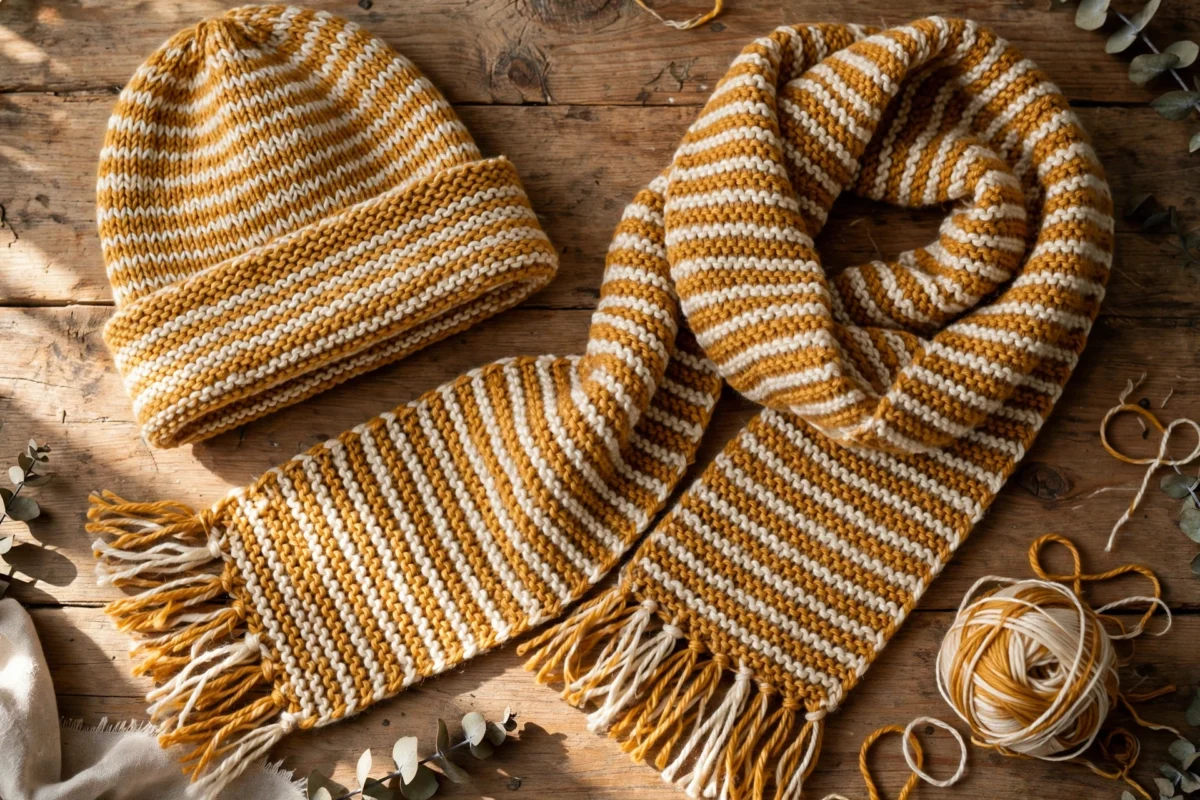
Hats and beanies. Smooth #4 worsted acrylic is the default for the 40 and 48. Caron Simply Soft and Lion Brand Heartland are the most pattern-supported choices. For a baby hat on the 22 or 32, drop to #3 DK such as Bernat Softee Baby.
Scarves. Tube scarves want the same smooth worsteds. For flat-panel scarves, a cotton blend is reported to lie flatter with less edge curl.
Blankets. Blankets are panel projects, which means yardage matters as much as feel. Large-skein smooth acrylics (Big Twist Value, Lion Brand Pound of Love) keep costs sane and color consistent across panels.
Sweaters and garments. Panel-mode projects reward a yarn you have already tested in a tube. Wool and wool-blend worsteds (such as Lion Brand Wool Ease) add warmth and elasticity; one well-documented sweater pattern uses Wool of the Andes Worsted. Whatever you choose, knit and measure a swatch panel first — garment fit depends on your machine, your tension setting, and your yarn together.
Socks. Socks are the exception to the “medium weight” rule: they are typically worked on the 22-needle machine with thinner yarn, and a wool/nylon blend (such as Berroco Vintage, recommended by pattern authors for boot socks) wears far better than plain acrylic. Expect a looser fabric than hand-knitted socks.
The Pitfall Checklist
Before a yarn goes anywhere near your machine, run through this list:
- Too thick. Anything honestly graded #5 bulky or above is outside the manual’s guidance for these machines. Light #5 experiments aside, thick yarn is the fastest route to a jammed crank and strained needles.
- Too fuzzy. Halo and fuzz shed into the needle bed, grab onto stitches, and hide the stitch definition you need to spot mistakes.
- Too splitty. Loosely plied yarns split under the needle hook and produce half-stitches.
- Too stiff. Rough, wiry acrylics (the budget-skein trap) multiply friction. If a yarn feels scratchy in the skein, the machine will feel it too.
- Too little give. Cotton and linen at tight tension punish every inconsistency. Loosen a notch and slow down.
- Too thin for the machine. Fingering yarn in a 48 produces a loose, holey tube and drops stitches. Match thin yarns to the 22.
Two habits prevent most yarn problems regardless of brand: start the tensioner at its middle setting and adjust from there, and crank slowly and evenly for the first rows of any new yarn until you can hear and feel that it is feeding cleanly.
If You Are Still Choosing a Machine
Yarn choice and machine choice interact: the 48-needle machine covers the widest useful yarn range (about 1.5–4.5 mm), which is one reason it is the most popular size. Current models in our store: the Sentro 22 needle at $35.99 for socks and small items, the 32 and 40 needle at $49.99, and the Sentro 48 needle at $54.99 for the broadest project range. You can compare all sizes in the Sentro knitting machine category.
And when a needle does bend or a tensioner wears, spares are cheap — keep a set from the knitting machine accessories shelf on hand so a $2 part never stops a project.
FAQ
What size yarn is best for a Sentro knitting machine?
#3 DK and #4 worsted are the safe zone for most Sentro machines. The manual recommends medium weights — DK, worsted, Aran — and warns that very thin yarn drops stitches while very thick yarn can jam.
Can you use bulky yarn on a Sentro knitting machine?
Generally, no. Standard #5–#6 bulky yarns are outside the recommended range and are a common cause of jams and grinding. A light, soft #5 has been reported to work with loosened tension, but it is an exception — test a short tube first and stop at any resistance.
Can you use cotton yarn on a Sentro?
Yes, with adjustments. Cotton blends are reported to work well in panel mode and curl less, but cotton’s lack of stretch makes it less forgiving: use a looser tension setting and a steady, slower crank.
Why does my machine jam with a yarn that worked fine for someone else?
Because “#4 worsted” is a range, not a size. Thickness, stiffness, and surface finish vary between brands and even between product lines of the same brand — as the two Caron lines above show. Judge each new skein with a short test tube before committing a project to it.
Can you use fingering or sock yarn on a Sentro?
Yes, on the right machine. Thin yarns belong on the 22-needle model, where they are commonly used for socks. In a 40 or 48, the same yarn produces a loose fabric and frequent dropped stitches.


2 thoughts on “Best Yarn for a Sentro Knitting Machine: Weights, Fibers, and Brands That Run Cleanly”